
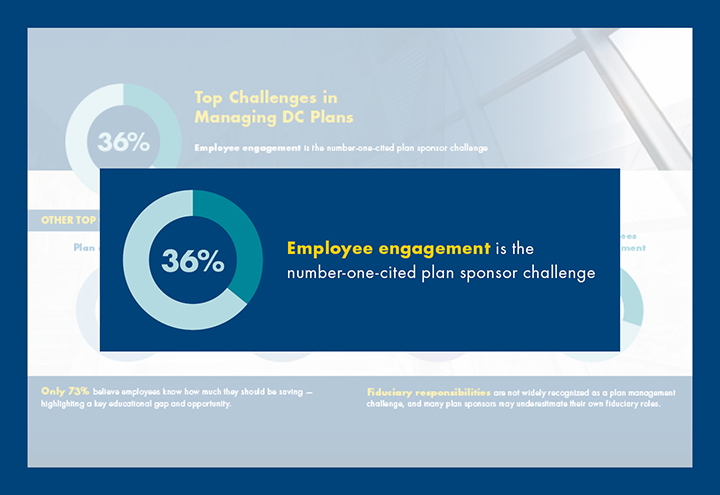
 DC plan sponsors manage their plans using a variety of tactics and strategies. While most demonstrate a strong commitment to employee financial well-being, a critical gap in fiduciary understanding could be an obstacle to successful plan oversight and effectiveness.




Related Research
2026 Retirement Investors: Behaviors, Attitudes, and Financial Situations
LIMRA’s Retirement Investors Survey tracks the perceptions, attitudes, behaviors, and financial condition of retirees and non-retired workers in the United States
LIMRA Financial Wellness Index®: 2026 Update
The 2026 update of the LIMRA Financial Wellness Index® shows wellness overall increasing very slightly from 2024, but still behind our first measure in 2022.
Healthcare Cost Impact on Workplace Benefits
Discover how rising healthcare costs are reshaping workplace benefits—and how smarter strategies can protect budgets, employee well-being, and trust.
Risky Business: Managing Regulatory and Fiduciary Risk in Defined Contribution Plans
Today’s increasingly complex — and litigious — environment poses challenges for the employers who choose to sponsor a workplace retirement investment program, and for the financial advisors who counsel and guide them. This report explores how defined contribution (DC) advisors understand these risks, how they counsel their clients, and what they look for in terms of help from service providers.
The 2026 Employer Benefits Landscape: Trends, Gaps, and New Directions
The 2026 LIMRA Landscape Report reveals how employers are reshaping benefits to deliver more flexible, targeted support — while a growing divide by company size is changing who has access to core coverage. New Employee Benefit Enrollment and Participation Trends report added.